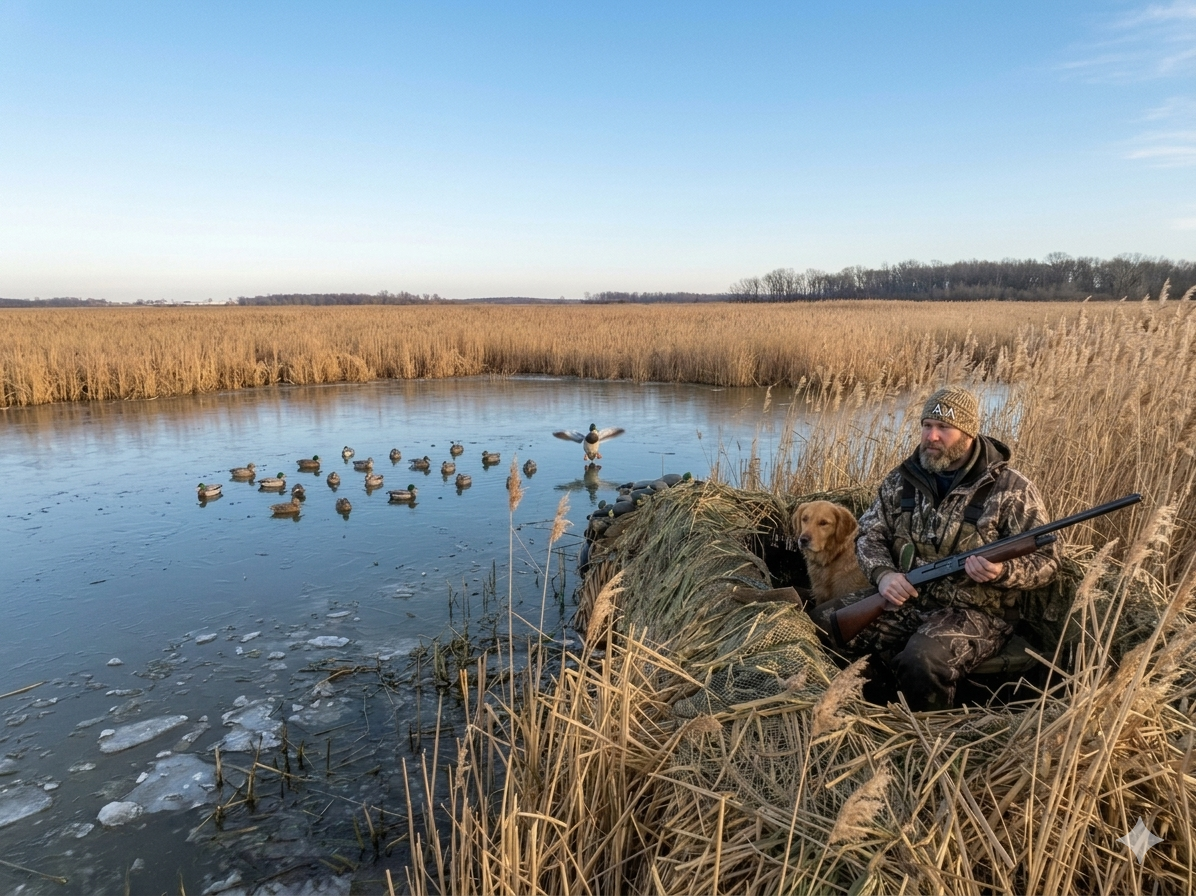
Every waterfowler has experienced the frustration. A flock of mallards drop their feet, hovers beautifully right over the kill hole of your decoys, you pull the trigger on a textbook shot—and absolutely nothing happens. The birds flare, completely unscathed, leaving you staring down your barrel in disbelief.
When you miss a seemingly unmissable shot, it is easy to blame your lead, your shells, or the wind. But more often than not, the true culprit is hiding right at the end of your barrel: your shotgun choke.
Choosing the wrong choke restriction is the fastest way to turn a world-class morning in the blind into a series of clean misses and feathered cripples.
To help you drop more birds cleanly this autumn, let’s demystify exactly how shotgun chokes work with steel shot, and break down the exact setup you need for everything from tight timber to open big water.
The Core Concept: What Does a Choke Actually Do?
Think of your shotgun choke as a nozzle at the end of a garden hose. If you leave the hose wide open, the water spills out in a broad, soft, short-range spray. If you constrict the nozzle, the water tightens into a high-velocity, narrow stream that reaches all the way to the edge of the yard.
A choke does the exact same thing to your column of shot. It narrows the muzzle down by fractions of a millimeter to control how fast your steel pellets spread out after leaving the barrel.
- Less Constriction: Yields a wider, open pattern closer to the boat—perfect for fast-moving, close-range birds.
- More Constriction: Holds the pellets together in a tight, dense swarm across longer distances—essential for high-flying or passing shots.
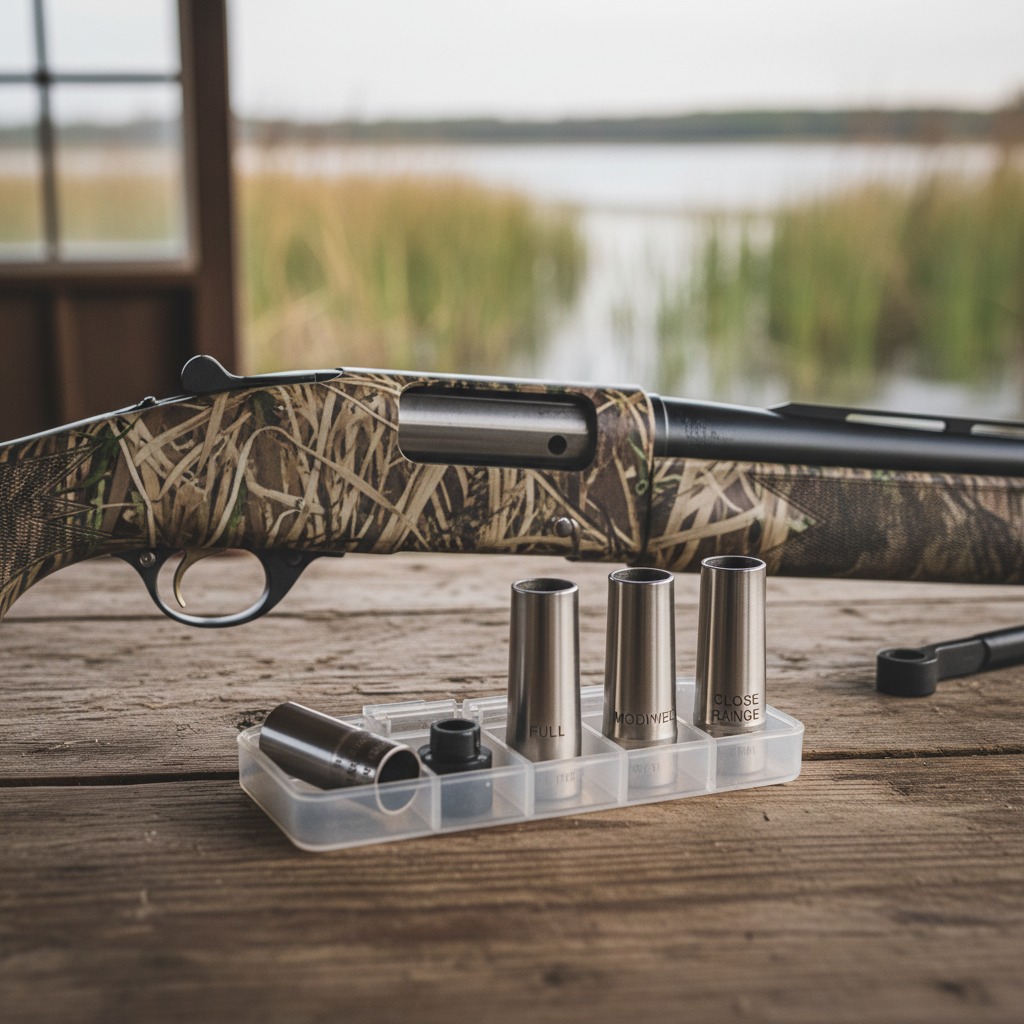
The Big Three Waterfowl Chokes
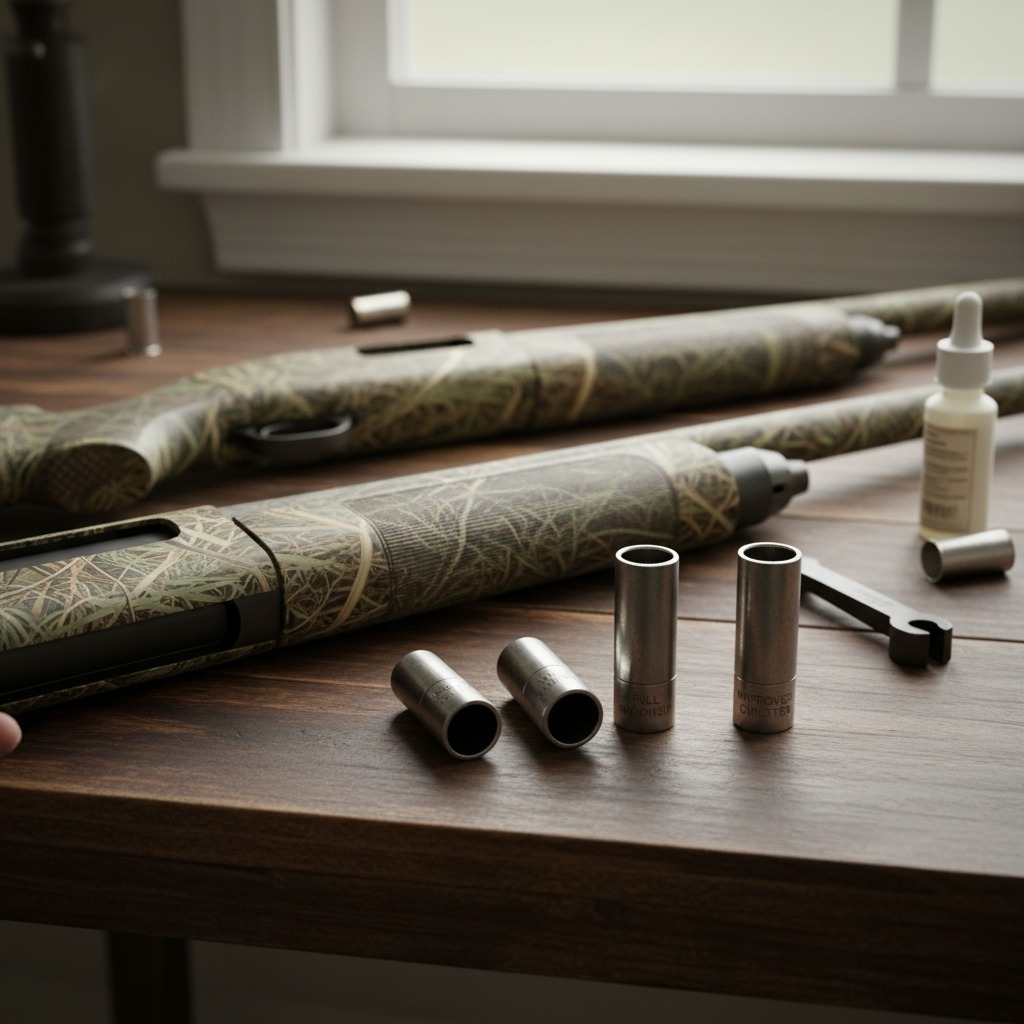
While there are dozens of specialty choke tubes on the market, 90% of waterfowl hunting can be mastered using just three primary configurations.
1. Improved Cylinder (IC) — The Close-Range Specialist
- The Blueprint: This is your widest practical hunting restriction. It allows the shot column to expand quickly after leaving the muzzle.
- Ideal Range: 15 to 30 yards.
- When to use it: Early morning teal hunts, small beaver ponds, or tight timber openings where ducks drop right into your lap out of nowhere. It gives you a massive margin for error on fast, close-quarter shooting.
Various IC Chokes
2. Modified (M) — The All-Around Workhorse
- The Blueprint: The absolute baseline champion of waterfowling. If you only own one choke tube for the rest of your life, make it a Modified.
- Ideal Range: 30 to 45 yards.
- When to use it: This is your primary choice for standard marsh hunting over a mixed decoy spread. It keeps your pattern tight enough to cleanly fold a mallard at 40 yards, yet retains enough forgiveness to hit a bird crossing at 25 yards.
Various M Chokes
3. Full Choke (F) — The Long-Range Sniper
- The Blueprint: The tightest standard restriction, compressing the shot column to hold maximum density at extreme distances.
- Ideal Range: 45 to 55+ yards.
- When to use it: Open-water diver hunting on big lakes or pass-shooting late-season Canada geese crossing over agricultural fields.
⚠️ The Golden Rule: Steel Changes the Rules
If you grew up shooting lead shot at upland game birds or clay targets, you need to wipe your memory clean when it comes to waterfowl. Steel shot behaves completely differently inside a barrel than lead does.
Lead is a soft metal; it compresses and deforms smoothly as it passes through a tight choke constriction. Steel is incredibly hard and unyielding. Because steel pellets refuse to compress, they crowd each other through tight chokes, causing pellets to bounce off one another. This can actually ruin your pattern, creating erratic holes or a “blown” swarm.
The Steel Rule of Thumb: Steel shot patterns one full restriction tighter than lead.
This means if you screw a Modified choke into your gun, firing steel shot through it will actually produce a dense Full pattern profile. Consequently, you should almost never fire large steel shot through a traditional Full choke unless the tube is explicitly labeled by the manufacturer as “Steel Shot Approved.” Doing so can cause pattern degradation or even damage your shotgun barrel.
How to Dial In Your Setup Before Opening Day
Don’t guess what your gun is doing. Two weeks before the season opens, grab a large roll of cardboard or paper targets, pace out 35 yards, and shoot your hunting load through your different tubes.
Look for the choke that leaves a balanced, round swarm of holes with no giant blank spaces where a duck could slip through. Once you find that perfect lockup, screw it in tight, leave the fumbling anxiety behind, and confidently focus on your lead when the first flock drops in.
- Need to upgrade your barrel setup before the opener? Explore the full selection of performance factory and aftermarket choke tubes at Cabela’s or browse tactical shotgun accessories on Amazon.
- Want more technical gear breakdowns? Return to our main index or open the Mojo Decoy Pro App to track real-time wind adjustments for your next marsh setup!